
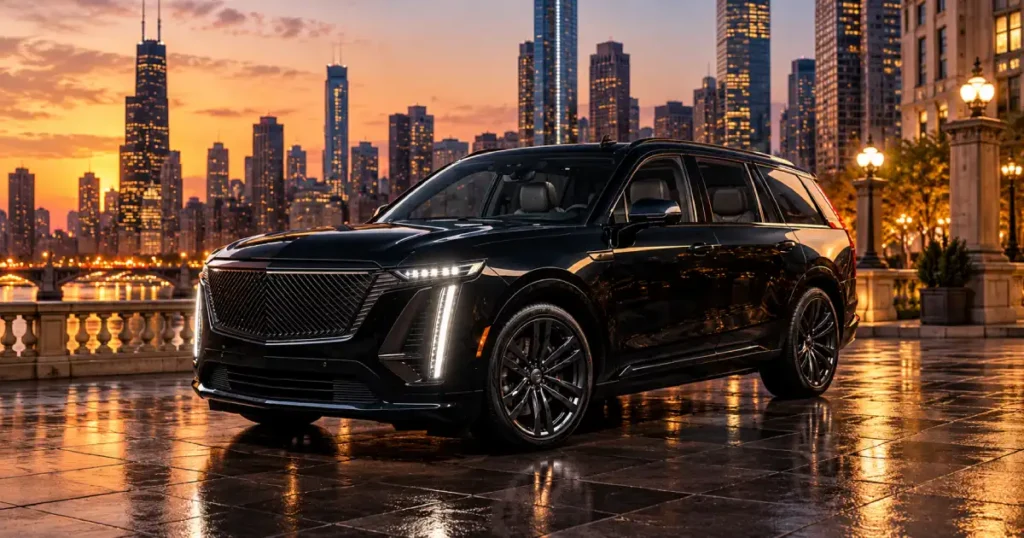
An exotic car photoshoot Chicago session works best when the concept, vehicle, location, light, reflections, staging, and shot list are planned before the car arrives. Choose the visual story first, confirm legal access to the location, then build the shoot around controlled angles, useful light, and a realistic production timeline.
Chicago offers varied architecture, skyline views, industrial textures, and dramatic light. But exotic cars are difficult to photograph well: glossy paint reflects everything and busy surroundings can overpower the composition.
Curated Excellence includes fashion, branding, and editorial photo shoots within its luxury car event services in Chicago, and its current Black Label Collection includes Ferrari, Cadillac, Cybertruck, and Mercedes-AMG models.
Key Takeaways
- Start with the creative goal before choosing the vehicle.
- Match the car’s visual personality to the subject, wardrobe, and campaign.
- Use softer light or controlled shade to manage glare and reflections.
- Scout for vehicle access, background clutter, parking, security, and permits.
- Decide whether the car is the hero or a supporting backdrop.
- Build a shot list before the session so the best light is not wasted.
- Confirm Chicago photography and vehicle-access rules before finalizing a public location.
Define the Creative Concept Before Choosing the Car
The vehicle should support the story, not become the story by accident.
Before choosing a Ferrari, Cybertruck, Cadillac, or AMG, decide what the finished images should communicate. Is the shoot romantic, high-fashion, futuristic, executive, athletic, or minimalist? Is the content for a brand campaign, fashion shoot, personal portfolio, engagement, or editorial project?
Once the mood is clear, the vehicle choice becomes easier.
A Ferrari naturally suits exotic, aspirational imagery. A Cybertruck creates a futuristic and architectural direction. The Escalade IQ Sport can support executive or premium lifestyle content, while AMG models create a more refined performance look.
Curated Excellence’s luxury event vehicles in Chicago are presented with distinct visual identities: the Ferrari as iconic and exotic, the Cybertruck as architectural and futuristic, the Escalade IQ Sport as commanding and executive, and the AMG models as refined or sophisticated.
Choose the Right Exotic Vehicle
Different vehicles change the scale and rhythm of the frame.
The Ferrari 488 GTB works well when the car itself should be a hero element. Low front-quarter views, detail shots, and wider environmental compositions can emphasize its shape.
The Cybertruck creates a very different visual language. Its geometric body pairs naturally with modern architecture, concrete, glass, and more experimental styling.
The Cadillac Escalade IQ Sport adds executive presence. The Mercedes-AMG GLE 63 Coupe and E 53 offer a more restrained luxury-performance look when the talent, clothing, or product should remain the focus.
Curated Excellence currently positions the Ferrari for weddings and photo shoots, and the Cybertruck as a striking option for fashion shoots and lifestyle branding.
Pick a Chicago Location That Actually Works
For an exotic car, think about vehicle access before the background. Can the car legally enter or stop where you want it? Is there room to reposition it? Can the photographer work safely? Will parked cars, signs, or pedestrians constantly enter the frame?
Then consider the visual setting.
Clean architectural backgrounds often work because they reduce clutter. A darker car can separate well from a brighter environment, while a bright or highly reflective vehicle may benefit from darker surroundings or controlled shade.
You do not need to force the shoot around a famous landmark. Modern architecture can suit Cybertruck or AMG, while a polished private venue can complement Ferrari or Cadillac.
Scout the exact location at roughly the same time of day you plan to shoot. Light, traffic, and reflections can change dramatically.
Plan for Light, Glare, and Reflections
Car photography is heavily influenced by reflections.
Adobe’s car photography guide notes that direct sunlight can produce glare, strong shadows, and washed-out colors. It also recommends golden hour for softer conditions and explains that a circular polarizer can help reduce reflections on windows and painted surfaces.
For an exotic car shoot, think in three lighting windows.
Golden Hour
The period shortly after sunrise or before sunset provides softer, lower-angle light. It is useful when both a person and a reflective vehicle need flattering light.
Adobe also notes that golden-hour light is softer and more directional than stronger daytime light, but the window changes quickly, so compositions should be planned beforehand.
Midday
Midday can still work, but location choice matters more. Look for open shade, building shadows, covered entrances, or another setting where the photographer can control the light.
Blue Hour and Evening
After sunset, city lights and a deeper sky can create a cinematic look. This works particularly well for futuristic or nightlife-oriented concepts, but additional lighting may be needed.
Always inspect what is reflected in the car. Photographers, signs, bright windows, traffic cones, and nearby cars can all appear across glossy body panels.
Stage the Vehicle Intentionally
Vehicle staging is more than parking.
First decide the car’s role. If the vehicle is the hero, give it enough visual space and position talent around it. If the person or product is the hero, angle the car so it adds recognizable luxury without dominating every frame.
Small changes matter:
- wheel direction;
- car-to-camera angle;
- distance between talent and vehicle;
- door position;
- background alignment;
- visible reflections;
- exterior cleanliness.
Curated Excellence’s luxury vehicle experience packages in Chicago include a dedicated Photo Session with scheduled vehicle presentation, a selected photo location or venue, exterior vehicle preparation, and dedicated staging time.
Build an Efficient Shot List
A shot list protects the best light and makes the session more useful. Plan for a small set of purposeful images instead of hundreds of unrelated frames:
Establishing Shot
Show the complete vehicle and enough of the environment to establish the Chicago setting or creative mood.
Three-Quarter Vehicle Portrait
A front or rear three-quarter composition can show the vehicle’s shape clearly without making the image feel like a basic inventory photo.
Talent With Vehicle
Place the subject beside, in front of, or slightly away from the car depending on which element should dominate.
Detail Images
Capture lights, wheels, body lines, reflections, wardrobe details, or the product being promoted.
Vertical Social Frames
Compose dedicated vertical shots for Reels, Stories, TikTok, and mobile campaigns rather than relying on aggressive crops later.
Negative-Space Images
Leave clean space for advertising copy, logos, headlines, or website design.
Evening Variation
If the schedule allows, stay through the transition from golden hour into blue hour. You can create a second visual mood without changing locations.
If the shoot is for a brand, plan the final placements before shooting. A website hero, Instagram post, mobile ad, and editorial spread all need different compositions.
Coordinate Wardrobe and Props
Wardrobe should work with the vehicle rather than compete with it.
A dramatic car, loud outfit, and busy background can create too many focal points. Build a mood board that includes the vehicle color, location texture, wardrobe palette, and intended lighting.
For product photography, decide whether the car is the hero or a supporting lifestyle element. Keep props purposeful so the product remains readable in the composition.
Check Chicago Permits and Production Logistics
If you are using public property, check the rules before the shoot date.
The Chicago Park District filming and photography guidance currently states that permits are required for commercial photography, web-based media, non-commercial special-occasion photography, documentary work, and several other types of filming or photography on Park District property. Commercial photography also requires insurance under the current permit framework.
Some popular Chicago locations are independently managed, so permission has to be confirmed with that location rather than assumed from a Park District permit.
Photography permission is also only one part of exotic-car production logistics. Confirm:
- where the vehicle may legally stop or park;
- whether special vehicle access is required;
- crew size;
- lighting and equipment footprint;
- security restrictions;
- arrival and staging windows.
For private venues, get approval for both photography and vehicle placement. Permission to photograph on the property does not automatically mean an exotic car can be staged anywhere on it.
Prepare for Weather and Schedule Changes
Create a primary plan and a backup plan.
The backup could be a covered entrance, garage-style setting, or another approved area with controlled light and legal vehicle access. Wind can also affect wardrobe, hair, reflectors, and lighting equipment.
Build buffer time into the schedule. Traffic, access, vehicle positioning, wardrobe changes, and permit check-ins can take longer than expected.
The biggest production problem is often not bad weather; it is losing the best light because basic logistics were unresolved.
Exotic Car Photoshoot Chicago Planning Checklist
Before shoot day, confirm the concept, mood board, vehicle, location, permits, photographer, talent, wardrobe, props, shot list, lighting plan, arrival time, staging position, backup plan, and final deliverables.
Specify whether you need horizontal website images, vertical social content, close-ups, or campaign-ready negative space.
Curated Excellence currently supports fashion, branding, and editorial photo shoots. When the date, preferred vehicle, creative direction, and location are ready, you can reserve a luxury vehicle experience in Chicago and share those details so availability and presentation can be coordinated.
Frequently Asked Questions
Q1: What is the best time for an exotic car photoshoot in Chicago?
Golden hour is often a strong starting point because softer, lower-angle light can reduce harsh shadows and glare. Midday can also work with controlled shade, while blue hour is useful for a more cinematic city look.
Q2: Which exotic vehicle is best for a photoshoot?
It depends on the creative direction. Ferrari suits aspirational and dramatic concepts, Cybertruck fits futuristic styling, Cadillac works well for executive luxury, and AMG models fit refined performance imagery.
Q3: Do I need a permit for a Chicago car photoshoot?
It depends on the location and use. Chicago Park District requires permits for commercial photography and several other types of photography on Park District property. Private and independently managed properties can have separate rules.
Q4: How should an exotic car be positioned for photos?
Start with the intended subject. If the car is the hero, give it space and a strong three-quarter angle. If the talent is the hero, place the vehicle slightly behind or beside the subject and adjust for reflections, background lines, and light.
Q5: How long should the shoot take?
There is no universal duration. The time required depends on the number of looks, location changes, talent, lighting setup, vehicle staging, and shot list. Plan around the deliverables rather than choosing an arbitrary session length.
Final Answer: What Makes an Exotic Car Photoshoot Work?
The best exotic car photoshoots are planned around the image, not just the vehicle.
Start with the story. Choose a car that supports it. Scout a location that works visually and legally. Schedule around useful light, control reflections, stage the vehicle intentionally, and build a shot list around the channels where the content will ultimately be used.
Chicago offers plenty of visual variety, but good production planning is what turns the city, vehicle, and talent into one coherent image.