
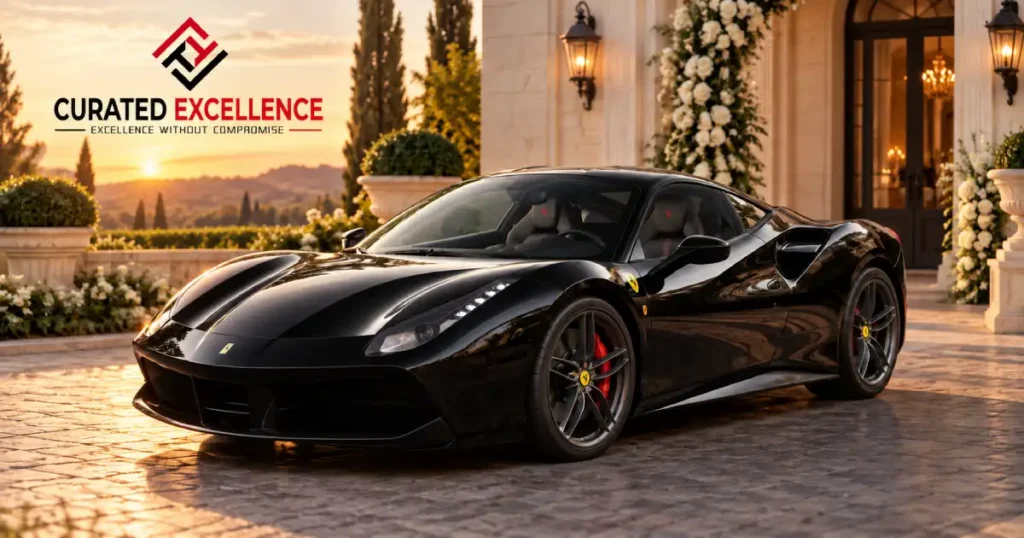
For wedding car photos Chicago offers three useful timing windows: before the ceremony for control and privacy, golden hour for softer natural light, and the grand exit for energy and guest reactions. The best choice depends on your venue, wedding timeline, traffic, photographer’s plan, and the style of images you want.
A luxury vehicle can appear at several points during a wedding day, but those moments do not create the same photographs. A quiet pre-ceremony portrait feels different from a sunset image or a late-night departure surrounded by guests.
Curated Excellence centers the vehicle around presentation, staging, and the event moment. That makes timing part of the visual plan, not an afterthought.
Key Takeaways
- Choose before-ceremony photos for the most control over timing, backgrounds, and group portraits.
- Choose golden hour when soft natural light and couple-focused portraits matter most.
- Choose a grand exit for movement, guest reactions, and a strong final image.
- Using two shorter photo windows can create more variety than one long session.
- Chicago traffic, venue access, and public-location rules can change the best timing.
- Confirm the schedule with the photographer, planner, venue, and vehicle provider together.
Before-Ceremony Wedding Car Photos
Before-ceremony photos are usually the most controlled option. The vehicle can be positioned before guests arrive, and the photographer has more freedom to adjust angles without reception pressure.
This works especially well when the vehicle is already at the venue or a private photo location. It gives the photographer time to check the wheel angle, background, reflections, and couple placement before the ceremony schedule becomes fixed.
The tradeoff is light. Midday sun can be harder than evening light. Adobe’s wedding photography guidance recommends looking for shade when overhead sunlight creates harsh facial shadows. A covered entrance, open shade, or bright architectural setting can therefore work better than full sun.
Before-ceremony timing is a strong choice when you want:
- clean portraits with minimal guest traffic;
- wedding-party or family photos with the vehicle;
- more time to refine the car and camera position;
- predictable access to the staging area;
- a relaxed first-look or pre-ceremony sequence.
If the vehicle is also part of the entrance, the guide to choosing a luxury car for a Chicago wedding arrival can help you plan the visual role around the arrival.
Golden-Hour Wedding Car Photos
Golden hour is usually the strongest option when the priority is romantic couple portraits with softer, directional natural light. The usable window changes with the season, weather, skyline, trees, and surrounding buildings.
For a luxury car, the lower sun can trace the hood, roofline, and side panels. That is especially useful with dark paint, where reflected light helps reveal body shape.
The challenge is schedule pressure. Golden hour does not wait for a late ceremony, long receiving line, delayed family portraits, or traffic. Your photographer should check sunset for the actual wedding date and scout how the venue changes the usable light.
In downtown Chicago, tall buildings may put a street or courtyard into shade before the official sunset. A venue entrance, rooftop, private drive, or open area with a clearer sky may therefore work better than the most famous backdrop.
Grand-Exit Wedding Car Photos
Grand-exit photos are less controlled, but they can be the most emotional. Guests are present, the celebration is already moving, and the vehicle becomes part of the departure rather than a standalone portrait prop.
This option works well for images of the couple walking toward the car, opening the door, pausing beside the vehicle, or leaving with guests behind them.
Most grand exits happen in lower light, so the photographer may use flash, ambient venue lighting, headlights, or a mix of light sources. The result can feel more cinematic and energetic than a daytime portrait.
Grand-exit timing is strongest when the vehicle is part of the real departure, the venue has a clean exit area, the photographer is staying through the moment, and guest positioning is planned in advance.
It is less suitable for a long portrait session because there is usually little time to keep repositioning the vehicle once guests gather.
Which Timing Creates the Best Look?
There is no universal winner. Match the timing to the image style you value most.
| Photo Window | Best For | Light & Mood | Main Advantage | Main Risk |
| Before ceremony | Editorial portraits, wedding party, family | Daylight or open shade | Most control over staging | Harsh midday light |
| Golden hour | Couple portraits, hero vehicle images | Soft, warm, directional | Flattering natural light | Short, time-sensitive window |
| Grand exit | Departure and guest reactions | Evening, flash, ambient light | Energy and storytelling | Less control |
If you want polished editorial photography, before ceremony or golden hour usually gives the photographer more control. If you want a final story-driven image, the grand exit often creates the stronger emotional moment.
Wedding Car Photos Chicago Timing Factors
Wedding car photos Chicago couples plan need more than good light. Traffic, valet activity, loading access, venue rules, and photography permissions can all affect the schedule.
If you want photos on Chicago Park District property, current guidance states that wedding and other special-occasion photography requires a permit. It also identifies several independently managed locations, so check the exact property before the wedding day.
Photography permission does not automatically mean a vehicle can be staged in the same place. Vehicle access, stopping, parking, and photo permissions may be separate.
For downtown weddings, leave a realistic buffer between an off-site photo location and the ceremony or reception. A beautiful backdrop is not worth making the arrival rushed.
How to Combine Two Photo Windows
You do not have to choose only one moment. Two shorter windows can create a more complete story without turning the wedding day into a long vehicle shoot.
A practical pairing is:
Before ceremony: controlled portraits and wedding-party photos.
Grand exit: a short departure sequence with guests.
Another option is:
Before ceremony: family and wedding-party images.
Golden hour: 10–20 minutes of couple-focused vehicle portraits.
The second approach works well when you want both schedule efficiency and softer evening light. Confirm whether the vehicle can remain available or be positioned again for the later window.
Vehicle Choice and Photo Timing
Different vehicles respond differently to the same wedding moment.
A Ferrari 488 GTB can be especially effective for controlled hero images because its low profile benefits from deliberate positioning. The Ferrari wedding photo timing and staging guide goes deeper into that specific visual style.
A Cadillac Escalade IQ or Mercedes-AMG can create a different look at a hotel entrance or exit because the taller proportions give the couple more scale beside the vehicle.
Curated Excellence’s luxury event vehicles in Chicago include Ferrari, Cadillac, Tesla, and Mercedes-AMG options. Choose the vehicle around both the wedding style and the moment you want photographed.
Wedding Car Photo Planning Checklist
Before finalizing the schedule, confirm these details:
- Main photo goal: editorial portraits, sunset portraits, exit, or a combination.
- Vehicle role: backdrop, arrival feature, departure moment, or staged portrait.
- Location: venue, private property, or an approved public photo spot.
- Sunset: actual timing for the date and how nearby buildings affect the light.
- Vehicle access: where the car can enter, wait, turn, and be positioned.
- People: couple only, wedding party, family, or full exit crowd.
- Staging buffer: enough time for the vehicle to be photo-ready before the couple arrives.
- Weather backup: a covered or indoor alternative.
- Exit logistics: photographer coverage, guest position, lighting, and departure timing.
Curated Excellence’s luxury vehicle experience packages in Chicago include photo-focused and arrival-oriented options that can help couples decide which part of the wedding day should receive the vehicle.
Frequently Asked Questions
Q1: Are wedding car photos better before or after the ceremony?
Before the ceremony usually gives more control and less guest traffic. After the ceremony may provide softer light, especially near sunset, but family photos, cocktail hour, and reception events often compete for the same time.
Q2: How long should golden-hour wedding car photos take?
A focused golden-hour vehicle session can often work within 10–20 minutes when the car is already positioned and the photographer has a clear plan. Allow more time if the couple or vehicle must move to another location.
Q3: Is golden hour always exactly one hour before sunset?
No. Golden hour is a general photography term, and the usable light varies with season, weather, geography, and nearby structures. In Chicago, tall buildings can block direct sunlight before the published sunset time.
Q4: Should the luxury car be included in the first look?
It can be, but the vehicle should not distract from the emotional first-look moment. A simple approach is to photograph the first look first, then bring the vehicle into the portrait sequence.
Q5: Is a grand exit better than golden-hour photos?
They serve different purposes. Golden hour is better for controlled, romantic portraits. A grand exit is better for movement, guest reactions, and a final storytelling image. Couples who value both can plan two short windows.
Which Wedding Car Photo Time Should You Choose?
For wedding car photos Chicago gives couples three strong choices: before the ceremony for control, golden hour for softer natural light, or the grand exit for movement and guest reactions.
If the schedule allows, one controlled portrait window plus a shorter sunset or exit sequence usually gives more variety without taking over the wedding day.
Planning wedding car photos in Chicago? Curated Excellence can help coordinate the vehicle presentation around your venue, photography schedule, arrival, and the visual moment you want to create.