
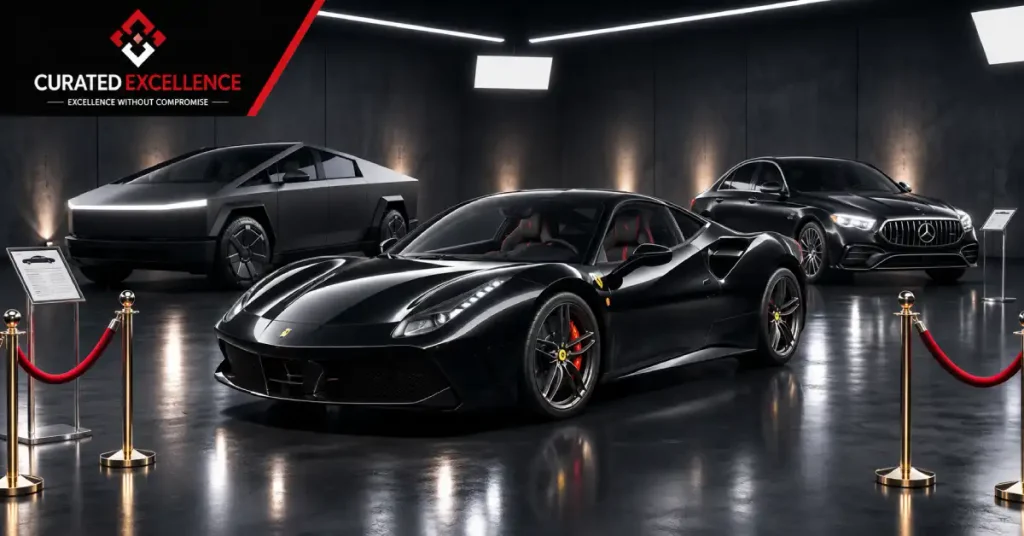
A single vs multi car display decision comes down to the role vehicles play in your event. Choose one vehicle when you need a clear hero, simpler staging, and focused photography. Choose multiple vehicles when variety, lineup impact, several guest photo moments, or a larger branded environment justifies the extra space and coordination.
The number of vehicles changes more than visual impact. It affects the floor plan, load-in sequence, photography angles, guest movement, signage, and how clearly people understand the event concept.
At Curated Excellence, the current event model includes single-vehicle presentations and a Multi-Vehicle Showcase using two or more Black Label vehicles. The right format should support the event rather than simply add more cars.
Start With the Event Goal
Choose the number of vehicles after deciding what guests should notice first.
If the car must anchor an entrance, support one campaign image, or create a premium portrait backdrop, one carefully selected vehicle may be enough. Adding more cars can weaken that focal point.
A multi-vehicle setup serves a different purpose. It can create a collection effect, provide several visual styles, or give a larger event more automotive presence.
The luxury car corporate event Chicago guide explains how vehicle placement should connect with the broader event objective.
Single vs Multi Car Display: Quick Comparison
| Decision Factor | One Vehicle | Multi-Vehicle Display |
| Visual message | One clear hero | Broader collection or lineup |
| Space | Easier to place | Larger coordinated footprint |
| Photography | Focused angles | More combinations and backgrounds |
| Guest flow | Simpler | More circulation planning |
| Branding | One central message | Several zones or themes |
| Load-in | Fewer movements | More sequencing |
| Best starting point | Intimate or focused events | Larger showcases and brand environments |
Neither format is automatically more premium. The better choice is the one that makes the event easier to understand and photograph.
When One Vehicle Works Better
Choose one vehicle when attention should stay concentrated.
This approach suits proposals, wedding portrait setups, executive photo areas, VIP entrances, and brand activations built around one clear creative direction.
A single vehicle also leaves more freedom for lighting, flowers, signage, furniture, or a backdrop. The car can feel integrated rather than competing with other vehicles for space.
For corporate events, one hero vehicle works well when the message is simple. A futuristic concept may suit the Cybertruck. An executive setting may call for the Cadillac Escalade IQ. A more exotic visual can point toward the Ferrari.
The Cadillac Escalade IQ event Chicago guide shows how vehicle character can influence the event atmosphere before additional cars are considered.
When Multiple Vehicles Work Better
A multi-vehicle display makes sense when the lineup itself is part of the experience.
That can include a large corporate event, launch, content production, gala, private showcase, or branded environment where guests should see more than one automotive style.
Curated Excellence describes its Multi-Vehicle Showcase as two or more Black Label vehicles staged together. Each vehicle should therefore have a reason to be present.
One vehicle can anchor the entrance while another supports a photography area. A lineup can also contrast exotic, futuristic, executive, and performance-led styling.
The published multi-vehicle showcase staging guide covers lineup formation and positioning in more detail.
Compare Photography and Guest Experience
Photography is one of the strongest reasons to choose between the formats carefully.
With one car, photographers can control the visual story more easily. Guests know where to stand, and the vehicle remains clear in wide and close images.
Multiple vehicles create more options, but also more visual competition. A lineup can support group photographs, wide event images, campaign content, or several portrait backgrounds.
Spacing matters. Cars packed too closely can create distracting reflections and make guest movement harder.
The luxury car brand photoshoot Chicago comparison can help when vehicle selection depends heavily on the final visual style.
Plan the Venue and Load-In
Multi-vehicle displays make venue planning more important because every additional car affects access and sequencing.
Do not judge the venue only by total square footage.
McCormick Place floor-plan guidance requires layouts to account for aisles, exits, utilities, equipment, and other operational elements. Its vehicle fire-safety guidance also places specific requirements on displayed vehicles after positioning.
That makes a multi-car concept a complete layout problem, not several separate parking spaces.
Large exhibition venues can make multi-vehicle concepts easier. Navy Pier Festival Hall provides more than 170,000 square feet and eight freight doors for exhibition access.
Smaller private venues may still support several vehicles, but the route and final layout need individual approval.
Match the Vehicles as a Collection
A multi-car display is strongest when the vehicles relate visually.
Curated Excellence’s luxury event vehicle collection includes Ferrari, Cadillac, Tesla, and Mercedes-AMG vehicles. Its all-black presentation creates a visual connection even when body styles differ.
That makes contrast useful rather than distracting.
A Ferrari and Cybertruck can create an exotic-versus-futuristic pairing. Cadillac and Mercedes-AMG can create a more executive or performance-luxury direction.
Do not choose vehicles only because they are available. Consider height, silhouette, body style, camera angles, and the event theme.
Consider Branding Before Adding Cars
For a brand activation, ask whether each additional vehicle helps tell the story.
One vehicle often works better for a campaign with one headline, product, or hero visual. Several vehicles can work when the event has multiple zones, products, guest experiences, or a collection-style theme.
The key is hierarchy.
Decide which car guests should notice first. Position the remaining vehicles so they support that first impression rather than compete with it.
Use a Simple Decision Framework
Ask these six questions before choosing the display size:
- What is the main moment? Entrance, reveal, photography, networking, or showcase?
- Is one vehicle the hero? If yes, start with one.
- Does each extra vehicle add a different role? If not, it may be unnecessary.
- Can the venue support the lineup comfortably? Include access and guest circulation.
- Will photographers benefit from several vehicles? Plan actual camera positions.
- Can load-in and load-out happen smoothly? Confirm the sequence early.
If most answers favor one focal point, choose a single vehicle. If variety adds real value and the venue can support it, a multi-vehicle display becomes more compelling.
Frequently Asked Questions
Q1: Is one luxury vehicle enough for a corporate event?
Yes, when the vehicle has one clear role. A single car can anchor an entrance, branded photo area, executive portrait setup, or product-launch backdrop without competing with other visual elements.
Q2: How many cars make a multi-vehicle display?
For Curated Excellence, the Multi-Vehicle Showcase is positioned around two or more vehicles. The right number still depends on the venue, event goal, layout, and selected vehicles.
Q3: Is a multi-vehicle display better for photography?
It offers more variety, but not automatically better photographs. Multiple cars can support wide shots and different portrait backgrounds. One vehicle usually provides a simpler composition and stronger focal point.
Q4: Which format works better for a smaller venue?
A single vehicle is usually the better starting point because it needs less staging and circulation space. The final choice should still use actual vehicle dimensions and an approved venue floor plan.
Q5: Can different vehicle styles be displayed together?
Yes, when the contrast supports the concept. Different silhouettes can create useful variety, especially when the vehicles share a consistent presentation theme.
Q6: Do multiple cars make load-in more difficult?
They add coordination. The team must consider vehicle order, turning space, final positions, and whether one parked vehicle blocks another vehicle’s route.
Choose the Format That Supports the Moment
A single vs multi car display should be chosen by purpose, not vehicle count alone.
Use one vehicle when the event needs a strong hero, focused photography, simpler guest flow, or an intimate presentation. Choose multiple vehicles when the lineup adds real variety, supports a larger environment, or creates several valuable visual moments.
The best display gives every vehicle and guest enough room to make sense within the event.
Planning a luxury vehicle display in Chicago? Curated Excellence can help shape a single-vehicle or multi-vehicle presentation around your venue, event format, and visual goals.